The Makers

Masters of the loom

A carpet is the work of dozens. The designer draws the cartoon, the dotter sets it to graph, the dyer prepares the palette, the weavers tie the knots, the clippers bring the surface to life, each contributing a skill the others cannot replace. The maker is the name we give to the one who orchestrated them, who bore the risk, held the standard, and put his name to the finished piece. It is not a claim of sole authorship. It is a claim of responsibility.

This is a continuing record of the makers, living and past, whose workshops shaped the modern handmade carpet.

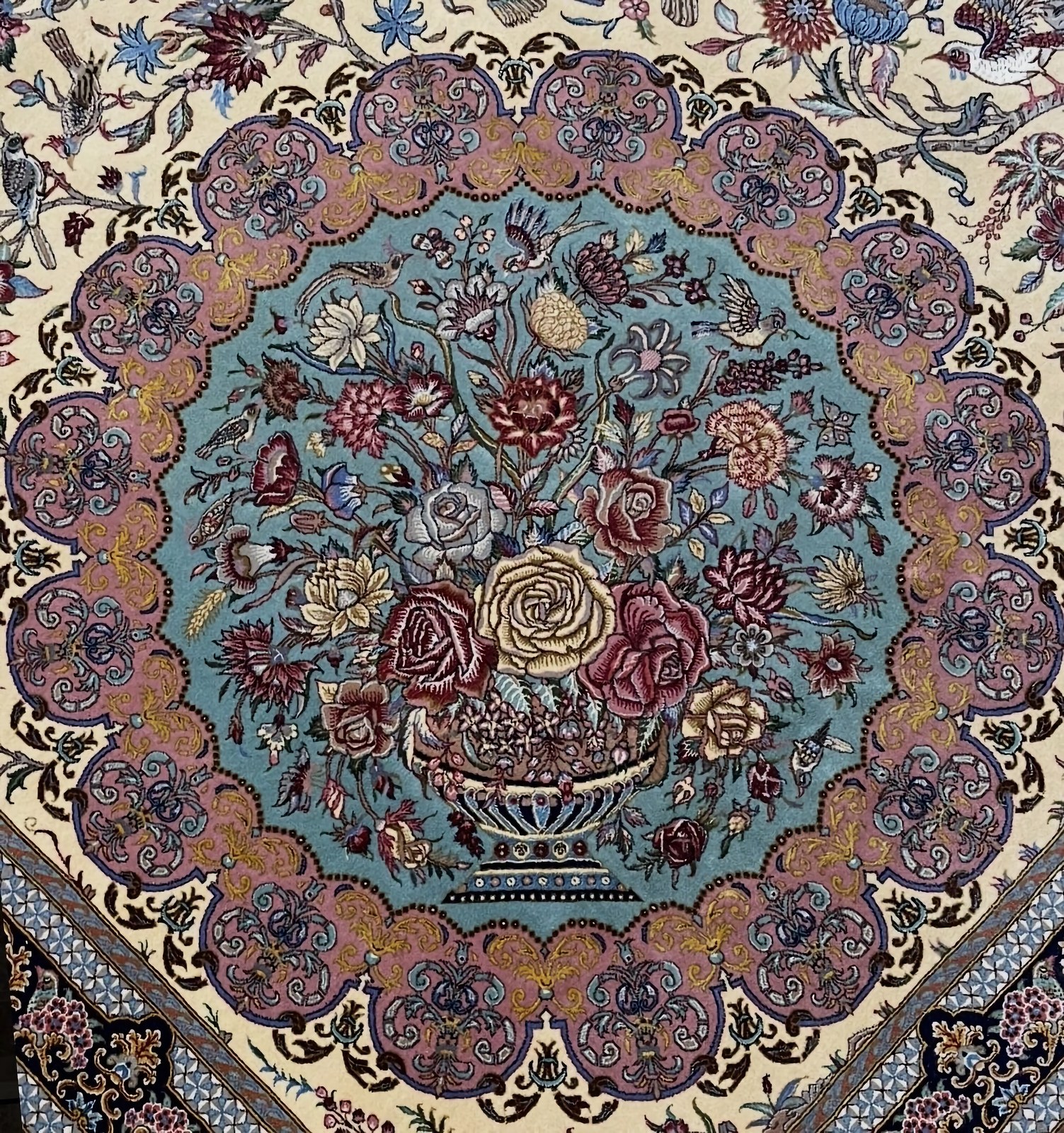
A Qom carpet by Mir Mehdi, designed by Prof. Abbas Malek.
A Qom carpet by Mir Mehdi, designed by Prof. Abbas Malek. From the collection.

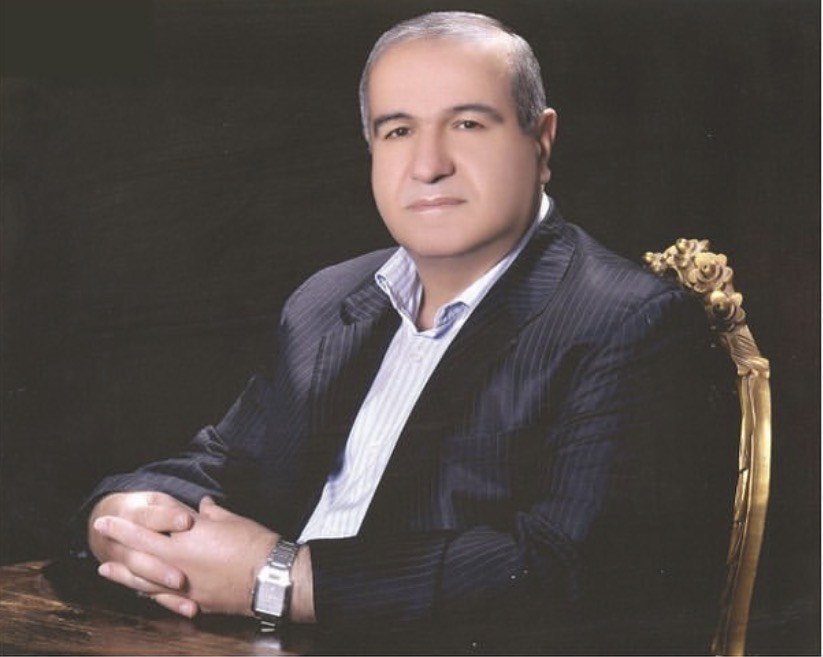
Iran · Qom · b. 1932

Aghagol Mir Mehdi

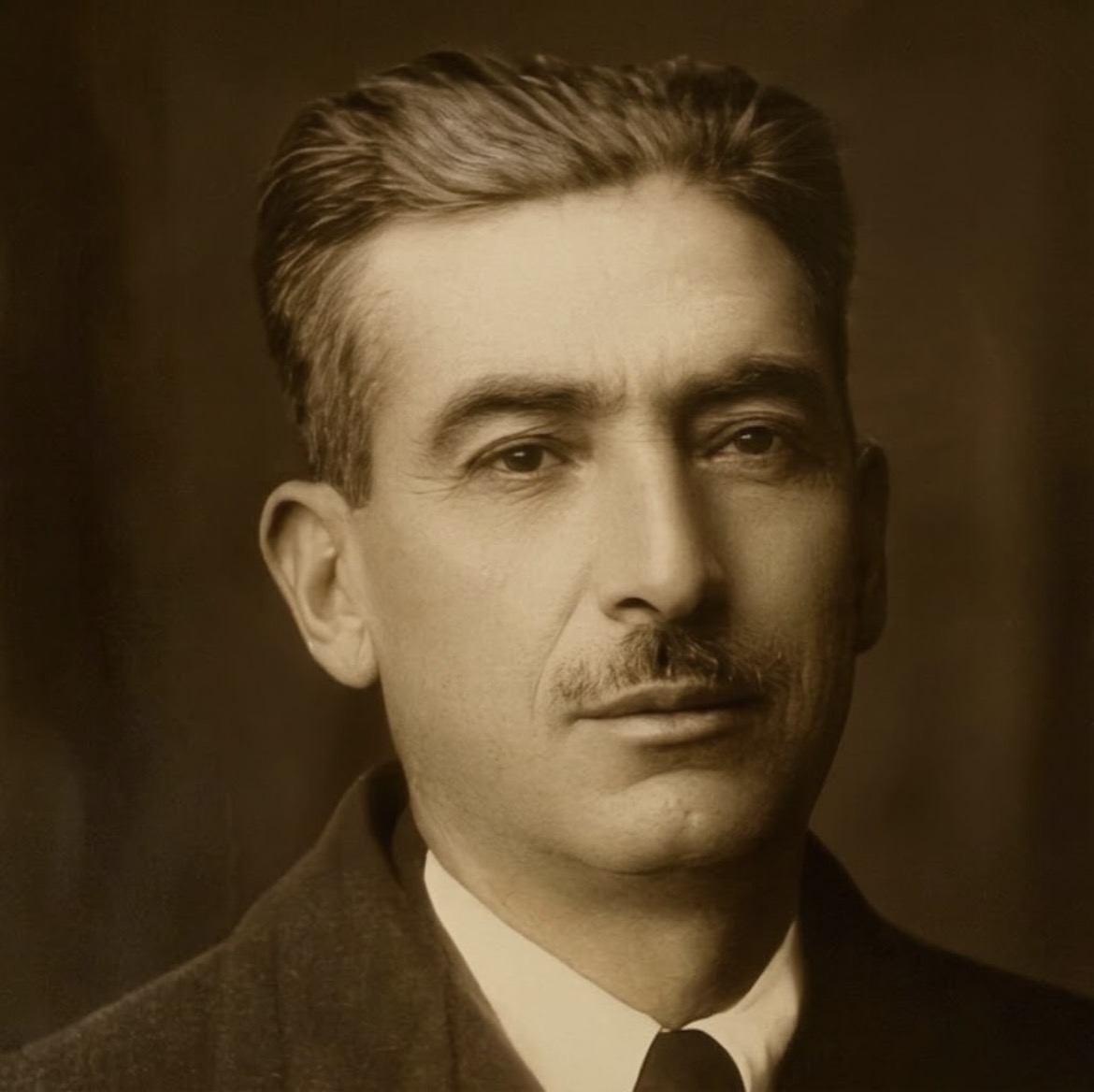
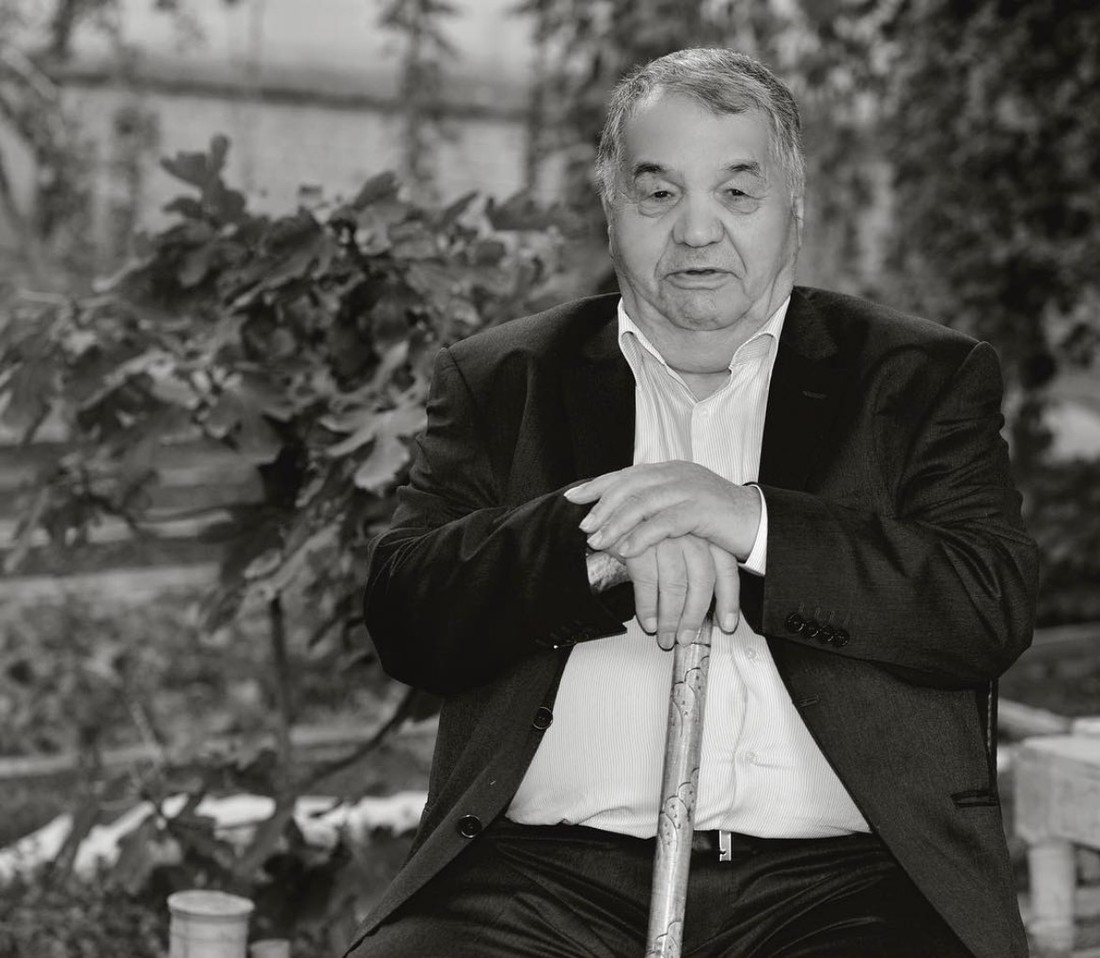
Grand Master Aghagol Mir Mehdi.
Master Aghagol Mir Mehdi. Archival photograph.

Born in 1932 in the village of Jasb, Master Aghagol Mir Mehdi has given some seven decades to his art. He began at sixteen, weaving wool carpets in his homeland, before moving to Qom and turning to silk. The atelier he founded there is today one of the largest and most respected in the city, and its silk carpets are widely collected in Iran, the Gulf, and the West.

The defining quality of his work is its refinement. Throughout his career, he has worked with the best designs available, from the great masters of Kashan in his early years to leading artists more recently, among them the Isfahan designer Akbar Mahdiei and the Qom designer Abbas Malek. He is known for his delicate, confident use of colour and his ability to create complex, perfectly balanced compositions in the classical Qom style. Some of his most remarkable pieces are rare narrative carpets that depict historical figures and ancient prophets. When his signature appears woven throughout a piece, it is the mark that the master himself inspected and approved it. While the atelier is known above all for its all-silk Qom, it also weaves a handful of larger carpets in wool and silk on a silk foundation.

He ranks with the elite producers of Qom. One of the atelier’s silk carpets was presented by the Government of Iran to the United Nations office in Geneva, where it hangs in the Palais des Nations. He remains at work into his nineties.
Iran · Isfahan · c. 1869–1930

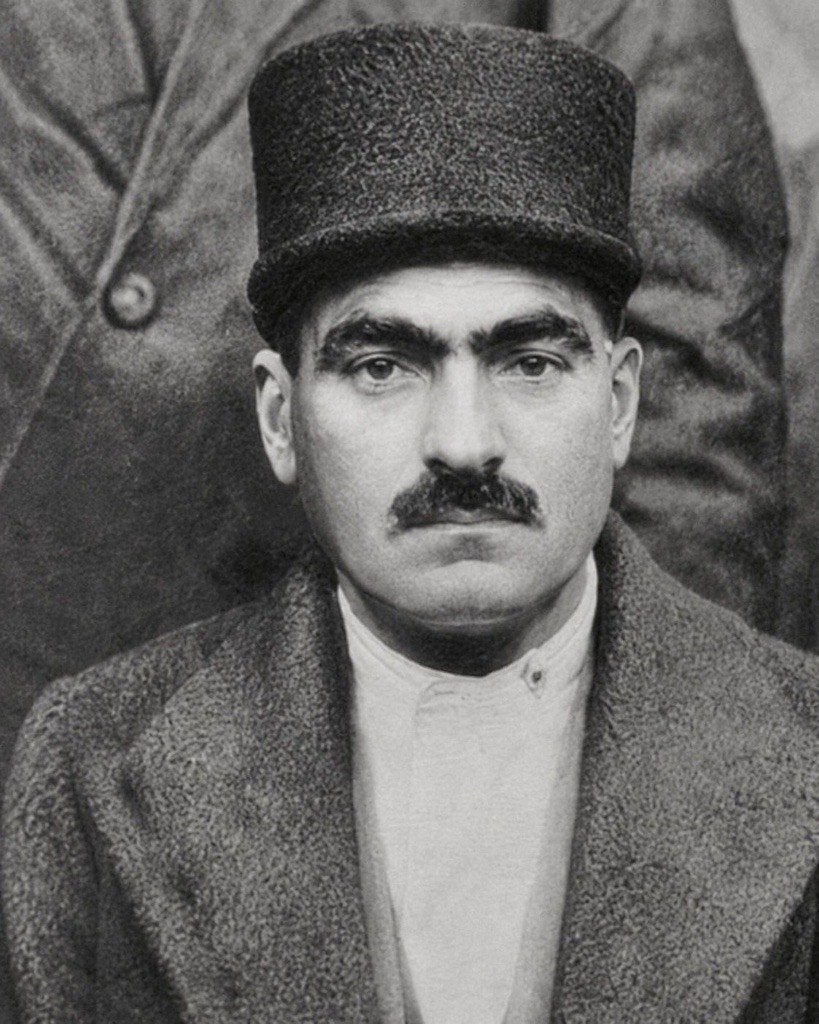
AbdolRahim Shureshi

Master AbdolRahim Shureshi.
Master AbdolRahim Shureshi. Archival photograph.

AbdolRahim Shureshi is among the earliest documented producers of fine carpet in modern Isfahan, working when the city was first recovering the textile tradition it had lost since the fall of the Safavids. He was already known by the epithet Shureshi when the governor of Isfahan, Zell-ol-Sultan, set up a small carpet workshop under his management. When that workshop was dissolved, the looms passed to AbdolRahim, who carried on independently and established his own branded house in the Naqsh-e Jahan quarter.

His style is remembered as classical and sober, and his looms set an early standard for the fineness the city would become known for. He is said to have travelled to St Petersburg, where he wove a portrait of the Tsar, and to have shown his weaving in Paris. The great designer Mirza Agha Emami is recorded as having drawn cartoons for his workshop, and carpets survive that are attributed to that collaboration. His son, Abbas Shureshi, became a master of natural dyeing and worked closely with Reza Seirafian in the generation that followed.

Characteristically, he did not weave his name into his carpets; a Shureshi is known by its hand, not its mark. The Carpet Museum of Iran holds a carpet attributed to him, the Darvazeh Behesht, or Gate of Paradise. The Haghighi family, among the oldest of the Isfahan houses and weaving still, records that their own founder, Haj Mehdi Khan, trained as a boy under AbdolRahim Khan Shureshi, alongside AbdolMotaleb Shureshi and Master AbdolSamad, and that these masters were his kin. A fine Shureshi is counted among the notable carpets of the city’s revival.

Iran · Isfahan · dates not recorded

AbdolSamad

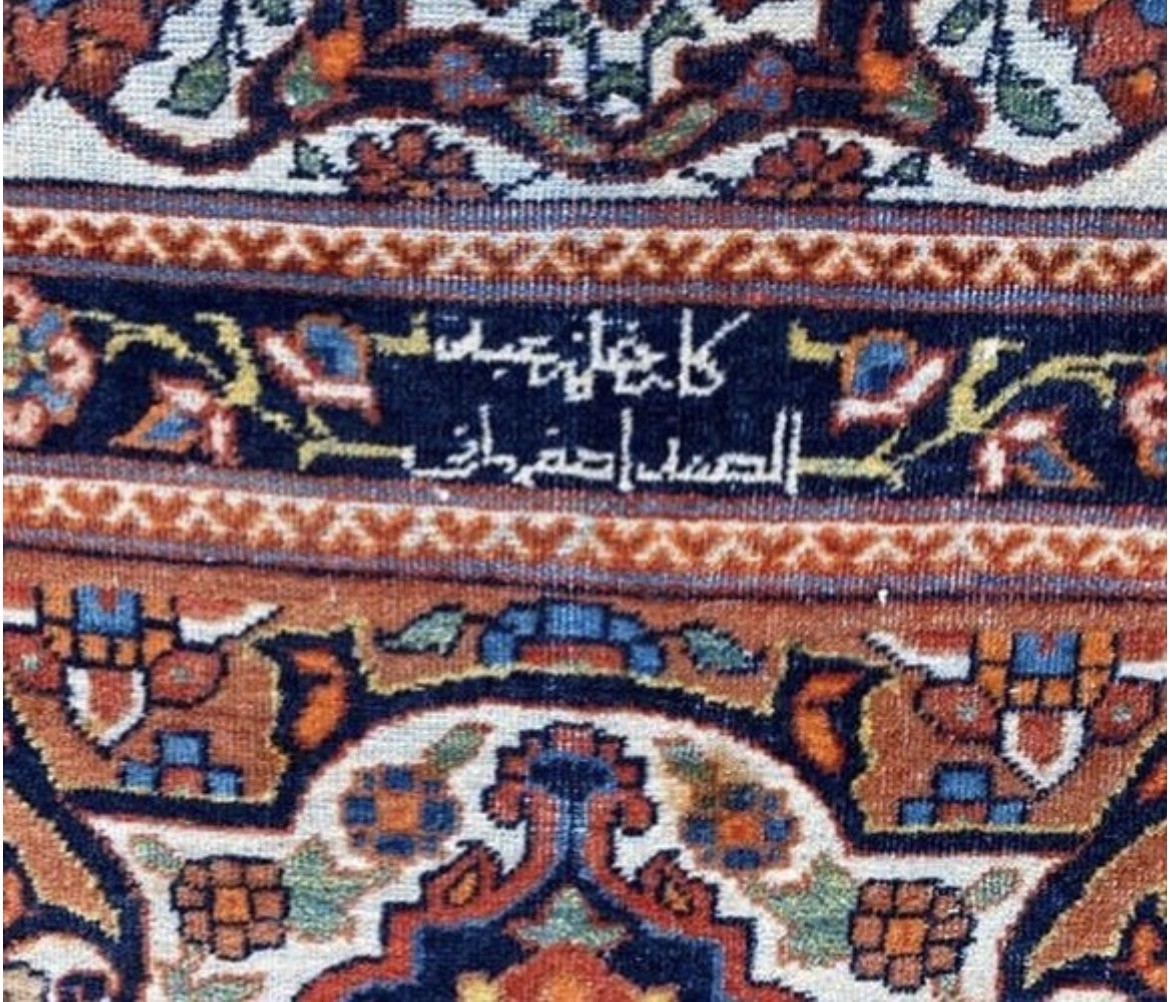
The Karkhane Abdolsamad Esfahani workshop signature woven into the border of one of his carpets.
The Karkhane Abdolsamad Esfahani signature, woven into the border of one of his carpets.

Carpets signed Karkhane Abdolsamad Esfahani, the Workshop of AbdolSamad, Isfahan, and in some pieces Karkhane Ostad Abdolsamad Esfahani, of Master AbdolSamad, survive in several private collections and in the Carpet Museum of Iran; a fuller form of the name, AbdolSamad Bozorgzadeh, appears on at least one piece. They place the workshop among the earliest documented of the modern Isfahan revival, active in the years when looms were returning to a city that had long since let the craft lapse. The family was originally from Kashan, and some of the inscriptions name them as Kashani merchants.

The carpet scholar Turaj Zhuleh, who has followed the AbdolSamad pieces across collections for more than two decades, counts only about ten and calls them one of the unsolved riddles of carpet scholarship. By his reckoning the dated examples span eighty to a hundred years, too long for one man, which marks AbdolSamad as a workshop carried across generations rather than a single hand. Nor do the pieces resolve to a single place: Zhuleh finds several carry the asymmetrical knot and the structure of old Kerman weaving, while others read as Isfahan, and certain rugs long catalogued as Bakhtiari work he reattributes to this group. The hand is certain and distinctive; the full account of the workshop behind it is still being pieced together.

What is not in doubt is the work itself. A carpet bearing the AbdolSamad name is one of the earliest and most distinctive products of the modern Isfahan school: fine, sober, and unmistakably of the city’s first revival generation.

Iran · Isfahan · b. 1942

Ahmad Zojaji

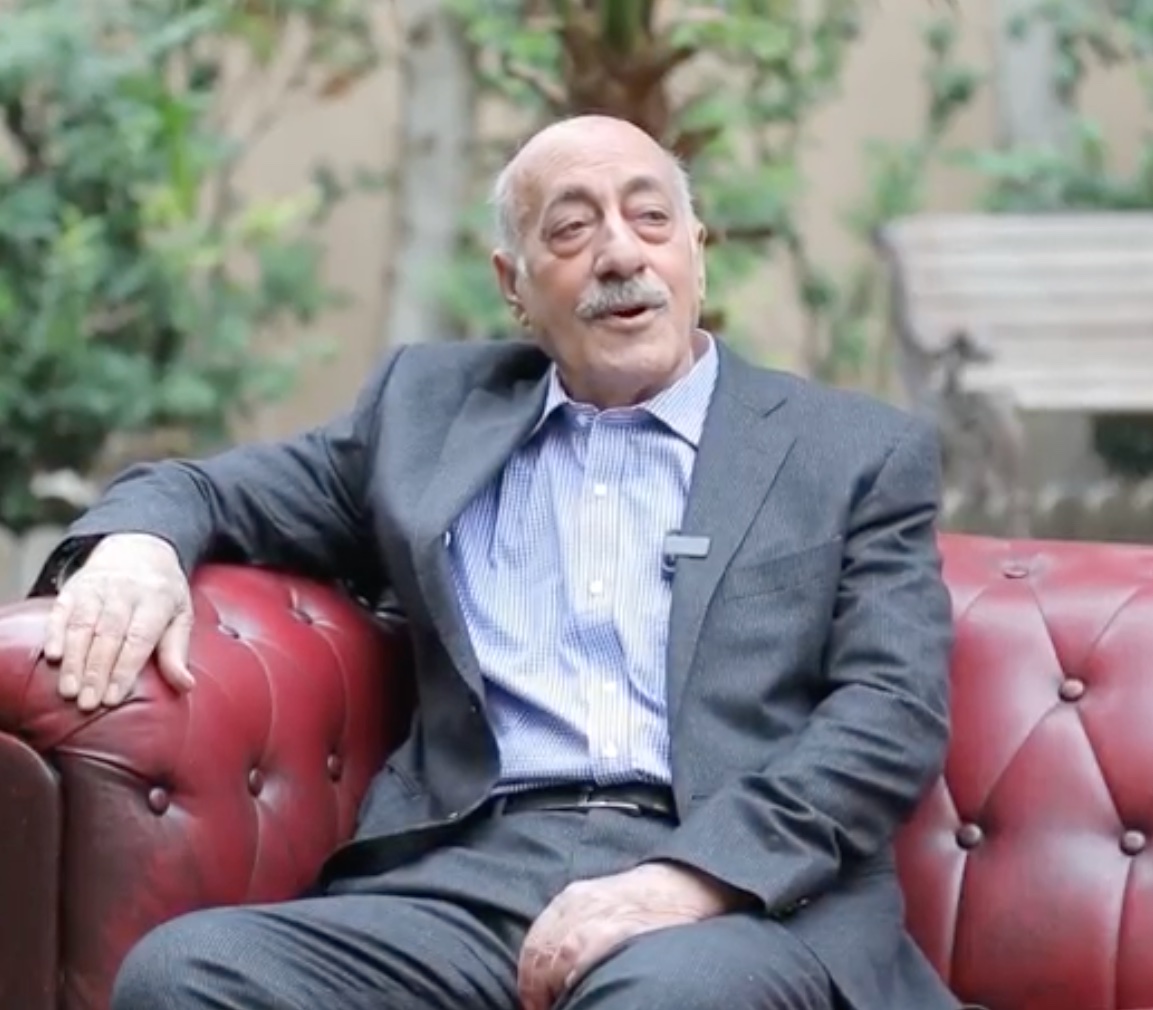
Ahmad Zojaji seated on one of his carpets.
Ahmad Zojaji, on one of his carpets.

Ahmad Zojaji was born in Isfahan in 1942 and is one of the city’s most accomplished carpet producers, working in the authentic Isfahan tradition. He came to the art around the age of twenty under the late master Abbas Shureshi, which places him within the Shureshi line, the family credited with the modern revival of Isfahan weaving. He took a master’s degree from the University of Tehran in 1968 and then gave himself to carpet production.

For more than fifty years he has held to one standard. His carpets are single-knotted and woven to precise count, in fine kork wool, at times highlighted with silk, on a pure silk foundation. They are coloured only with natural vegetable dyes, so the palette holds true over generations. To realise his work he draws on the cartoons of leading Isfahan designers: Haj Mirza Agha Emami, Haj Abbas Karbasioun, Jafar Rashtian, and Ahmad Archang, who is widely regarded as one of the great names of Persian carpet design.

He is recognised as a leading producer of Isfahan province and is counted by collectors among the city’s notable houses. A signed Zojaji is the vision of those designers realised through the discipline of a single master’s loom.

Iran · Qom · 1923–2014

Ali Rashtizadeh

Ali Rashtizadeh photographed beside one of his Qom silk carpets.
Ali Rashtizadeh. Archival photograph.

Ali Tajer Rashti, known as Rashtizadeh, was born in Kashan in 1923. He moved to Qom from Kashan in 1939 and began producing carpets in the years that followed. Over a long career he became one of the founding figures of the silk-carpet industry in Qom, a city whose weaving tradition is little more than a century old and was carried there largely by families from Kashan. He is credited with the first all-silk carpet woven in Qom, and his name remains closely tied to its early years.

He is remembered for reviving a large body of older Persian designs, by one account around four hundred, and rendering them in fine silk. For his patterns he drew on the cartoons of leading Kashan designers, among them Reza Sanei, Mirza Nasrollah Khan Naqqashzadeh, and Esmail Khan. His house became known for building a complete design from a small, restrained vocabulary of motifs rather than crowding the field, an approach that spread among other Qom workshops. At its height his work gave a living to several hundred weavers, across Isfahan and Qom, and the house maintained a presence in Paris, where his son represented it for many years.

He died in 2014, at the age of ninety-one. His name is honoured each year by the “Golden Knot” gathering held in his memory in Qom, and the house he founded continues under his family, whose head now leads the city’s handwoven-carpet producers’ association.

Türkiye · Hereke · b. 1936

Avak Şirinoğlu

Avak Şirinoğlu standing before his Hereke silk carpets.
Avak Şirinoğlu, before his Hereke silk carpets.

Şirinoğlu is the Turkish form of Shirinian, the name of one of the Armenian weaving families heir to the Kum Kapı tradition, among the most refined silk weaving the Ottoman world produced. Avak Shirinian was born in 1936 in Kayseri, into a family who, as they put it, grew up at the loom, and he learned the craft from childhood alongside his brothers. Theirs was a close line of that tradition: his elder brother Haigaz trained under the master Zareh Penyamin, and when Zareh died in 1949 the Shirinian brothers finished a carpet left unfinished on his loom.

In 1965, when the state silk works at Hereke closed, Avak and his brother gathered the master weavers who had been put out of work, sourced fine Bursa silk, built looms, and revived the production of silk Hereke under the name Şirinoğlu. Their carpets are very finely woven, the finest reaching some twenty knots to the centimetre, and one piece from 2018, the “Şirinoğlu 26,” reaching twenty-six. They usually signed in the old manner, an Armenian signature in the field beside the Ottoman “Hereke” mark. On a sacred carpet, though, the master would match his signature to the work, as here, where amid a field of Quranic inscription the name is woven in Arabic rather than Armenian, carrying the initial of Avak himself.

Avak Shirinian has been called the last of the Kum Kapı masters. His work has been gathered into the Arkas Collection, shown internationally, and passed on to a new generation of weavers in Armenia. A Shirinian Hereke brings together palace pedigree, Armenian mastery, and some of the most demanding silk weaving ever practised.

Iran · Isfahan · dates not recorded

Bahram Enteshari

The late Master Bahram Enteshari founded the Enteshari weaving house and was its most renowned figure, a designer and producer of Isfahan whose work, though never widely known to the public, has long been prized by experts and other makers. That quiet reputation was deliberate. He produced only a small number of carpets, each to a very high standard, in the classic Isfahan manner of the mid-twentieth century.

He both designed his carpets and oversaw their production, conceiving the pattern and directing its execution himself, in fine merino wool and silk on a pure silk foundation, with top-grade natural dyes and exceptionally high knot counts. It is these first-generation pieces, from the founder’s own era, that collectors prize. The Enteshari name would later pass into broader, more commercial production, but the early work stands apart as the fine and collectible expression of the house.

A carpet from Bahram Enteshari’s own workshop is the purest form of the name he created.

Iran · Isfahan · b. 1930

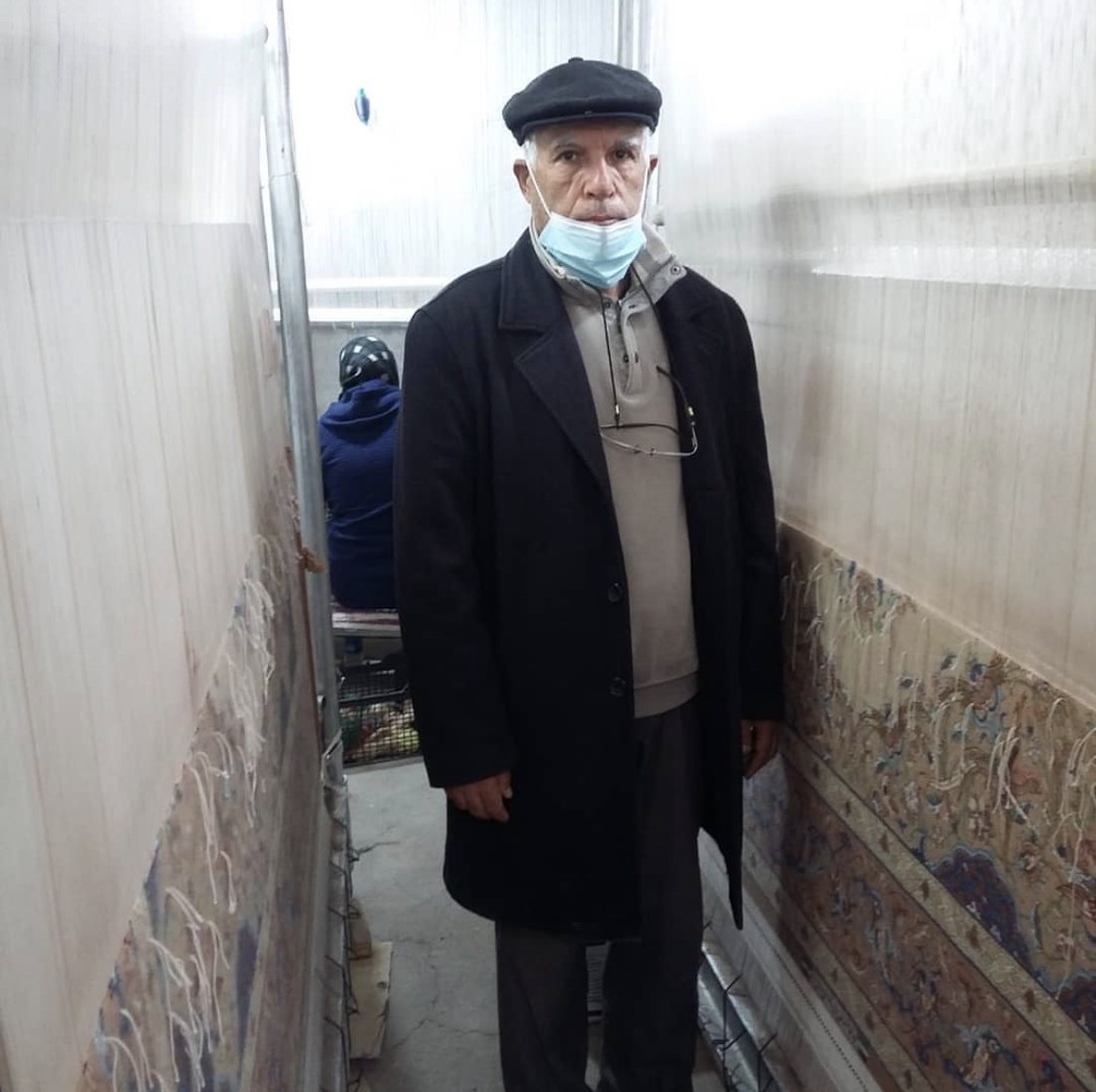
Hassan Hekmatnejad

Hassan Hekmatnejad at work on a design board.
Hassan Hekmatnejad. Archival photograph.

Hassan Hekmatnejad, of the Isfahan house known as Majnooni, was born in 1930. The family’s weaving traces back to his grandfather, Ahmad Beyg Majnooni, who served for a time as a steward to Zell-ol-Sultan, the Qajar governor of Isfahan, before leaving that service to take up the loom. His father, Mohammad Kazem, was a noted carpet master of the city; when he was killed by rivals in the trade in 1942, the young Hassan rebuilt the house from hardship, and under him it became one of the most distinguished in Isfahan. Its standing reached the court: a Hekmatnejad carpet was presented to the Shah, and in May 1967 the Shah gave one as a state gift to the visiting Romanian head of state, Chivu Stoica.

A Hekmatnejad carpet is known by the richness of its making. The pile is fine kork wool lifted with silk, laid on a foundation of silk, and the carpet ends in a distinctive kilim that begins flat and then turns to a raised band where the signature is set. The weave is fine and even, and finer still in the great pictorial pieces. He has been counted, with Haghighi, Amoghli, and Seirafian, among the makers whose carpets were sought by kings, and the house keeps its place at the front rank of Isfahan weaving.

Iran · Qom · b. c. 1954

Hossein Kashizadeh

Haj Hossein Kashizadeh.
Haj Hossein Kashizadeh. Archival photograph.

Haj Hossein Kashizadeh built one of Qom’s foremost silk houses on four generations of inherited craft. His carpets are sought by international collectors as some of the finest silk Qom work, and the house he leads remains one of the larger all-silk producers in the province. The family’s history was set down in an oral history given at the Qom Research Foundation in 2022.

The line begins with his grandfather, Mirza Ali Akbar Kashizadeh, who came from Kashan to Qom in the late Qajar period, by the family’s account in the 1880s. That is early against the usual reckoning, which puts Qom’s rise as a weaving city in the 1920s and 30s, but it is consistent with the handful of Kashani craftsmen known to have worked there before the trade took hold. His expertise was chelle-keshi, the setting of the warp upon the loom, the foundation without which no carpet can be woven. As he is remembered in the family, a producer who does not know warping has not learned half the work. His mother taught the women of the neighbourhood alongside him.

The second generation, Haj Gholamreza Kashizadeh, worked when Qom was still a minor centre making scarcely a few dozen carpets a year. He inherited his father’s mastery of the warp and carried production out into the surrounding villages, into Qanavat and the Jafarabad district of Saveh, while his wife taught the girls of the quarter to weave. It was on this inherited foundation that Haj Hossein built the modern house: a workshop of real scale and exceptionally fine all-silk knotting, its standing earned, in the end, not by the age of the name but by the carpets that carry it.

Iran · Isfahan · b. 1947

Jaafar Gholi Dadkhah

Jaafar Gholi Dadkhah at the loom.
Jaafar Gholi Dadkhah, at the loom. Archival photograph.

Jaafar Gholi Dadkhah was born in Isfahan on 22 March 1947, and is one of the most distinguished carpet designers of his generation. He is a scholar-artist of the loom, whose name carries the authority of true learning. He found his calling at the Isfahan School of Fine Arts, where the sight of Master Eisa Bahadori’s carpet designs turned him decisively to the art. As a student he learned point-mapping in the workshop of Haj Abbas Karbasioun, and his graduation work was judged so fine that it was woven and now resides in Isfahan’s Museum of Decorative Arts.

He went on to open his own design studio in Isfahan, collaborating with the great figures of the bazaar (Sadegh Seirafian, Hassan Hekmatnejad, Mirza Hashem Khordadzadeh) and bridging academic design with the finest production, woven exclusively in natural dyes. For three decades he taught carpet design at the Isfahan School of Fine Arts and lectured at the city’s Art University. The nation has honoured him with its Grade One Art Certificate, the equivalent of a doctorate.

The Dadkhah tradition continues through his son, Ali, a university lecturer in carpet studies. Each Dadkhah carpet is a chapter in a living tradition, drawn and composed with the authority of a genuine design house, and entrusted to the best looms of Isfahan.

Iran · Isfahan · b. 1970

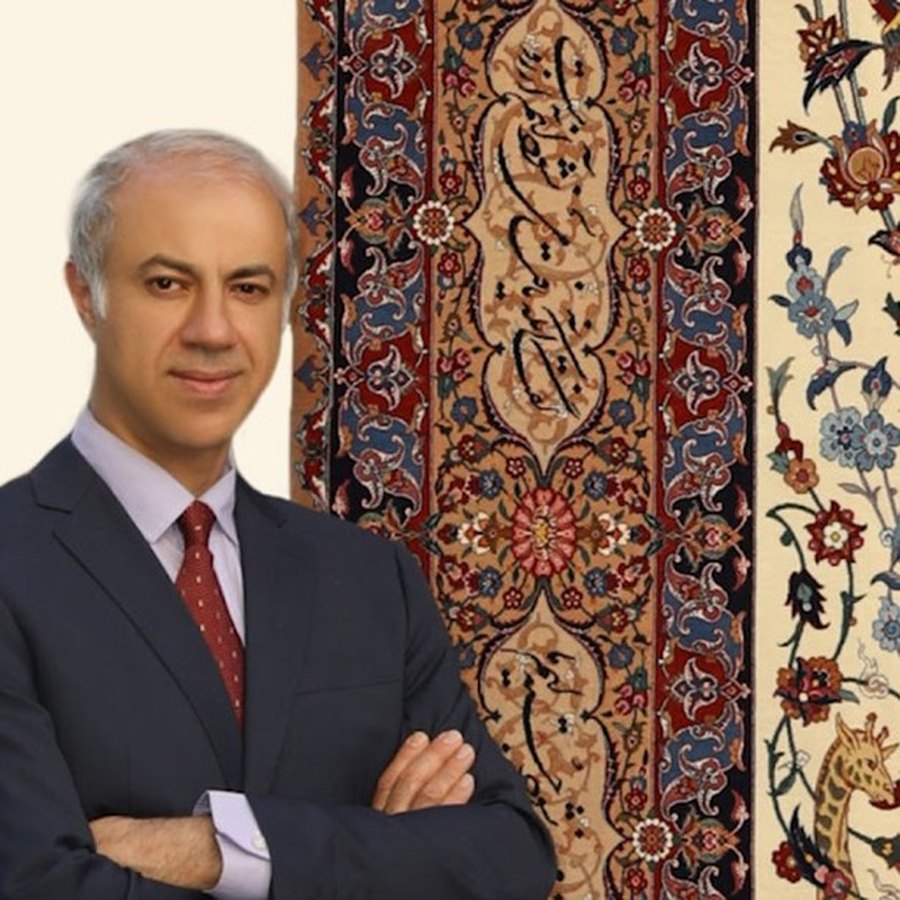
Karim Seirafian

Karim Seirafian photographed beside one of his Isfahan carpets.
Karim Seirafian, beside one of his carpets.

Born in 1970, Mohammad Karim Seirafian is the only son of Master Sadegh Seirafian to take up the loom, and grandson of Haj Reza Seirafian, the bazaar money-changer who founded the workshop in 1939. He trained at his father’s side before producing himself, and was schooled in the classic Isfahan design tradition of Eisa Bahadori and Javad Rostam Shirazi.

He is considered one of the foremost Seirafian producers of his generation. Like other members of the Seirafian family, he uses natural dyes and the fine silk and kork wool, and weaves only a handful of carpets to any one design. He revives original cartoons by Archang and Mosavvar-ol-Molki alongside designs of his own, among them a design named “Fish and Coral,” and signs his work within the pile.

The Seirafians have long drawn on the great designers of Isfahan. Jaafar Gholi Dadkhah, who collaborated with Karim’s father, Sadegh, is the designer of the Tree Pattern carpet shown in this collection, a mark of the close ties between the Seirafian looms and the city’s talented designers.

In 2024 he was among those honoured at the Second National Congress of Carpet Luminaries in Qom, named one of eight “Famous Masters” of Iranian carpet. His carpets are among the most highly valued of contemporary Isfahan production.

Iran · Qom · 1913–1986

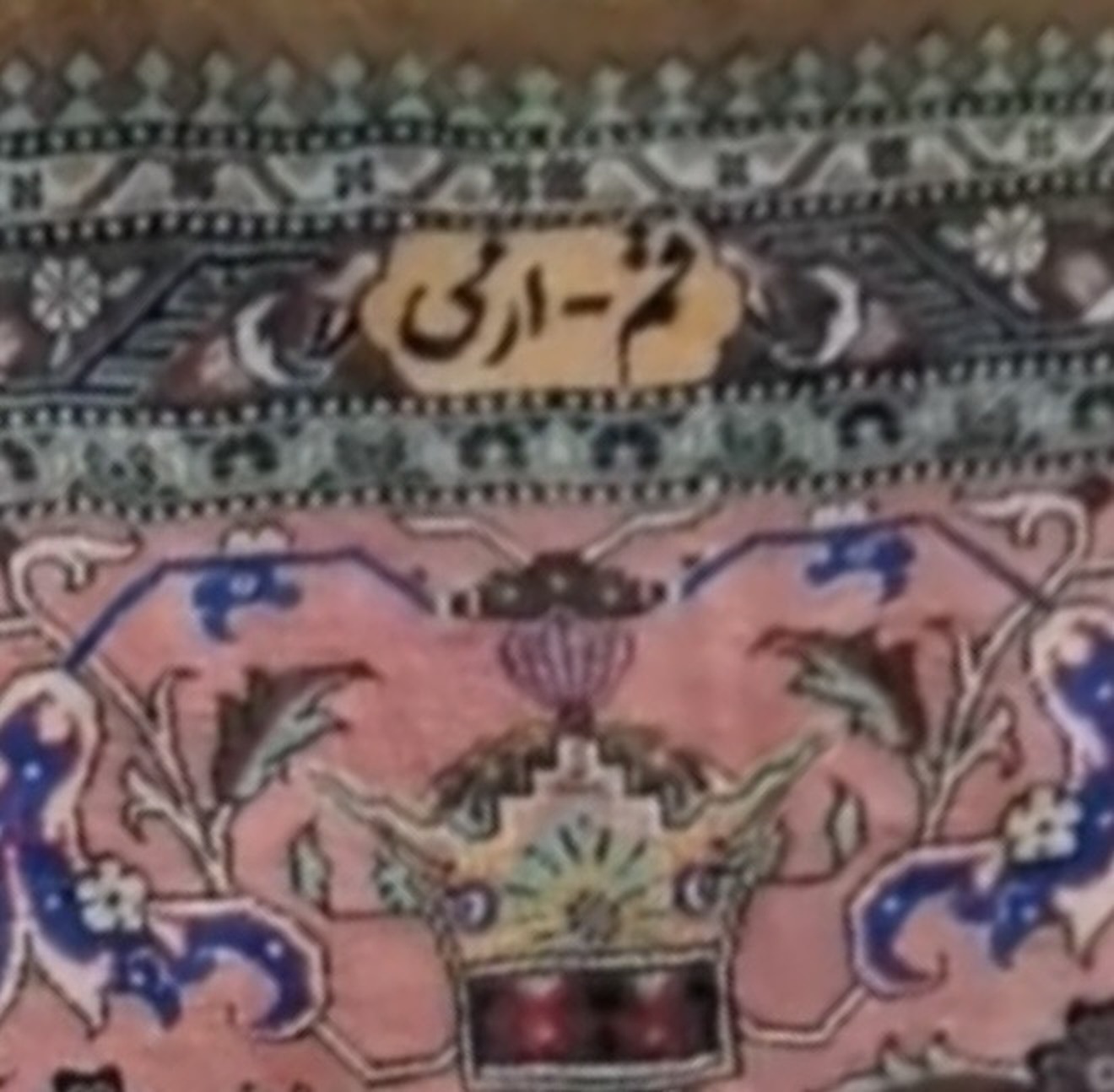
Mahmoud Erami

Haj Mahmoud Erami signature.
Haj Mahmoud Erami Signature.

Haj Mahmoud Erami was born in Kashan in 1913 and came to Qom as a boy of ten, after the death of his mother, in the care of his maternal uncle, Haj Mohammad Kashani. He spent three or four years learning chelle-davani, the warping and threading of the loom, and by the age of twenty was among the most skilled warp-setters in the city. His distinctive contribution was geographic. He was the first to carry Qom carpet production out of the city and into the surrounding villages, into Khalajestan, Mansourabad, and a dozen settlements beyond, building the network of rural looms that became a defining feature of the Qom industry.

His son, Haj Hossein Erami, grew up in the workshops and trained under his father for a decade before beginning his own all-silk production. He carried the expansion further still, into Saveh, Hamadan, Zanjan, and Tabriz, and was among the first in Qom to weave very large carpets, up to forty square metres, entirely in silk. He died in 2016, at the age of seventy, and his three sons, Mohammad, Mehdi, and Mahmoud, continue the house today. In 2019, a four-square-metre Erami carpet with a lapis lazuli ground and gold medallion was chosen by the Tehran Chamber of Commerce as a state gift to the Japanese Prime Minister, Shinzo Abe, during his meeting with the Iranian president, a measure of the standing the family name holds in the finest Qom silk.

The Erami name in Qom extends beyond a single lineage. Haj Mahmoud’s son Haj Reza Erami established a parallel house that has earned recognition of its own: in 2024, Reza was among those honoured at the Second National Congress of Carpet Luminaries in Qom, named one of eight “Famous Masters” of Iranian carpet.

Iran · Isfahan · c. 1881–1968

Mehdi Khan Safdarzadeh Haghighi

Haj Mehdi Khan Safdarzadeh Haghighi, in a studio portrait.
Haj Mehdi Khan Safdarzadeh Haghighi. Archival photograph.

Haj Mehdi Khan Safdarzadeh Haghighi was born around 1881, the son of Safdar Khan, and founded one of the great dynasties of Isfahan weaving, foremost in the city to this day. He was raised in the household of the pioneer Abdol-Samad Khan, whose daughter he married, and so was tied by both blood and marriage to the Shureshi family, the line whose approach remade Isfahan carpet design in the early twentieth century.

He was a master dyer above all, and made his name on the depth and permanence of his natural-dyed wool and silk. He worked with the leading painters of the Qajar and Pahlavi courts, Haj Mirza Agha Emami foremost among them, along with Mosavvar-ol-Molki, Gholamreza Farshchian, and the Kashan master Mirza Nasrollah Khan Naqqashzadeh; from these partnerships came carpets such as the “Afshan Emami” and the “Daghianous.” He was a modest man who rarely wove his own name into his carpets, caring more for the quality of the whole and the welfare of his weavers. Around 1926, at the invitation of the Red Cross and the French consul, he founded a school on Naqsh-e Jahan Square to teach the art to Isfahan’s Jewish community. By 1939 he was reckoned one of the leaders of the Isfahan industry. He died in 1968.

The dynasty he began continues into its third generation. His descendants have been named among the “Renowned Figures” and “Famous Masters” of Iranian carpet by the national carpet authority.

Iran · Isfahan · b. 1972

Mehdi Saeedi

Mehdi Saeedi photographed before one of his figural carpets.
Mehdi Saeedi, before one of his carpets.

Mehdi Saeedi is among the few Isfahan producers of his generation who hold to natural dye without exception. He was born in Tehran in 1972 and raised in Kuwait, where his father, a contractor, was among the first to bring ājor-kāri, the Iranian craft of decorative brickwork, to the country. His taste was formed in Kuwait. In that decade the country was at the height of its prosperity, a regional crossroads of commerce and culture. The family returned to Iran in 1990, when he was eighteen. Both his parents had a deep passion for carpets, and their home held fine Isfahan and Kashan pieces; his eye for them was formed there.

He arrived at carpets indirectly. After a period in the Tehran jewellery trade, he moved to Isfahan, where his parents had earlier settled, and began as an exporter, before setting up his own workshop around 2001. He composes his own cartoons and describes his approach as sākhtār-shekani, a deliberate breaking with convention: he fuses the traditional and the modern within a single piece, and at times produces work that is fully contemporary.

His carpets are woven in fine wool and silk on a silk foundation, coloured only with natural dyes that he prepares in his own workshop: madder and cochineal for the reds, weld for the yellows and golds, walnut husk for the browns, indigo for the blues and navy. The principle he gives for this is both aesthetic and cultural: what is drawn from nature keeps its authenticity and ages gracefully. Among the subjects he weaves are the derakht-e zendegi (tree of life), the shekārgāh (hunting ground), and the bazm (courtly feast). He works in limited runs, retiring a cartoon after a few weavings.

In 2022 Saeedi was honoured by the National Carpet Center of Iran as a finalist of the inaugural Qali-ye Fakher festival. His carpets carry a distinct character, recognisable to the trained eye by their colour and composition.

Iran · Isfahan · b. 1933

Mohammad Ali Khajeh

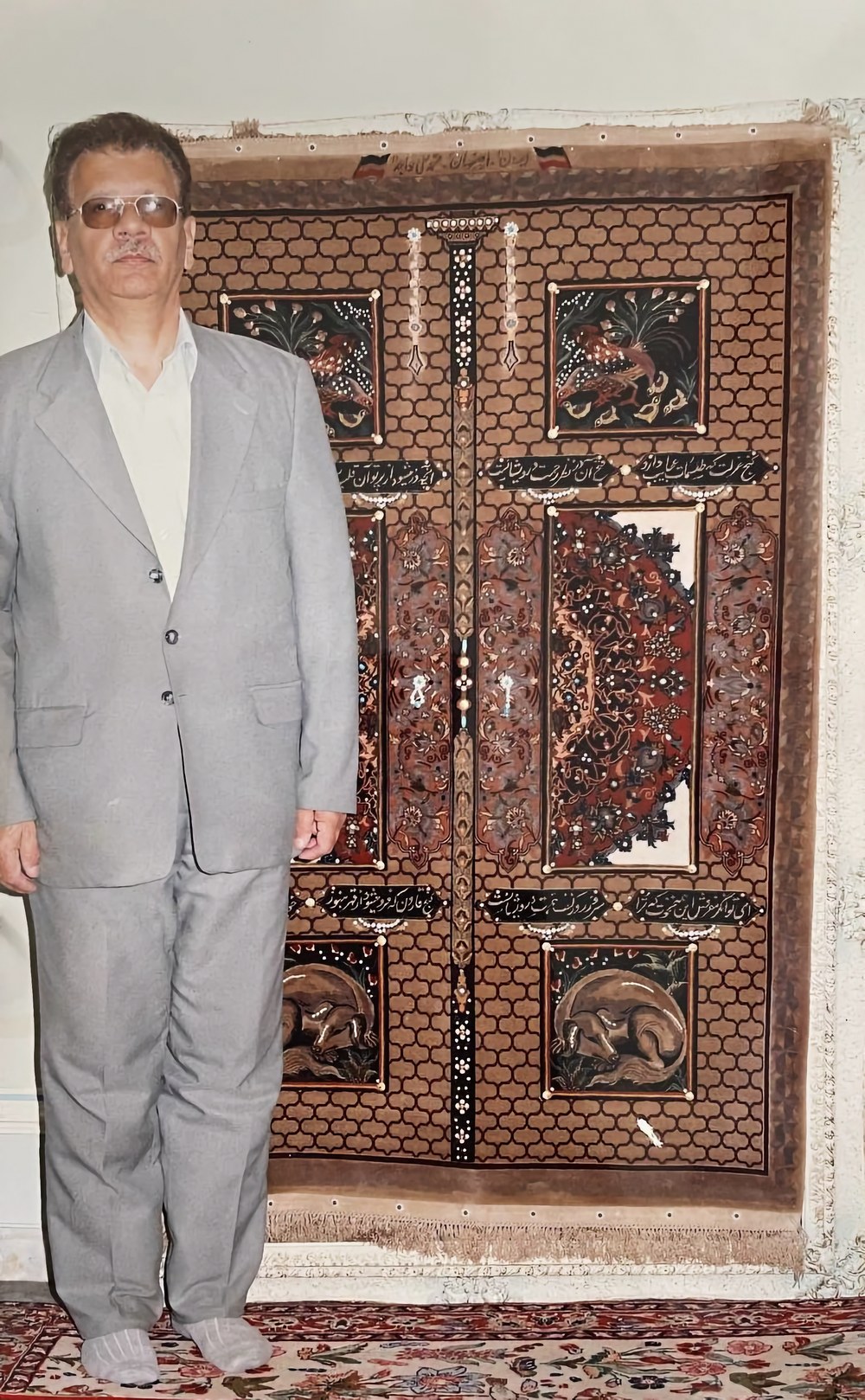
Mohammad Ali Khajeh photographed beside one of his sculpted-relief ‘Door’ carpets.
Mohammad Ali Khajeh, beside one of his sculpted-relief ‘Door’ carpets. Archival photograph.

Mohammad Ali Khajeh is widely considered a master without rival in Isfahan. He is the acknowledged master of the barjasteh, or sculpted-relief carpet. In this rare technique, the pile is carefully carved to different heights, bringing the design into three dimensions. Khajeh was a producer in the truest sense. He conceived each work, hired the finest designers and dot-masters, and personally oversaw the weavers who brought his ideas to life.

He combines that sculptural relief with the very highest density of Isfahan weaving. He works in fine kork wool and silk on a silk foundation, drawn with a jeweller's precision. At the summit of his art are the celebrated “jewellery carpets,” in which he sets gold, pearls, coral, and turquoise into the pile itself. One documented masterpiece, under four square metres, carries close to three million knots, together with hundreds of pearls and pieces of eighteen-carat gold. The relief tradition reaches back to Qajar-era Isfahan, but the modern jewellery carpet is his own.

His “Door to Paradise” carpets are heavenly gardens worked in gold and gemstones. Where others are valued for flawless tradition, a Khajeh stands as a sculptural work of art, rare and unrepeatable.

Iran · Qom · b. 1947

Mohammad Jamshidi

Mohammad Jamshidi.
Mohammad Jamshidi. Archival photograph.

Mohammad Jamshidi was born in Qom in 1947, to a family from Kashan. His mother set him to learning the loom as a boy, and he went on to train under the Qom master Haj Ebrahim Montazeri; he set up his own loom at fifteen and entered the weavers’ guild, the first of his family to take up the craft professionally. He founded his own workshop and committed it to pure silk.

He works in silk at very high knot densities, and over the years he developed a style of his own and registered it, a fine-drawn manner that sets delicate, broken floral work against bolder vases and blooms, so the eye is held by the contrast. The thread is coloured with natural dyes. Each carpet leaves the workshop with a numbered, certified mark of authenticity, to distinguish it from imitation.

In 2024 he was among those honoured at the Second National Congress of Carpet Luminaries in Qom, named one of eight “Famous Masters” of Iranian carpet. His silk carpets are held among the most valuable of Iranian weaving and are sought by collectors abroad, in Japan in particular, with pieces exhibited at houses such as Christie’s.

Iran · Isfahan · 1881–1974

Reza Seirafian

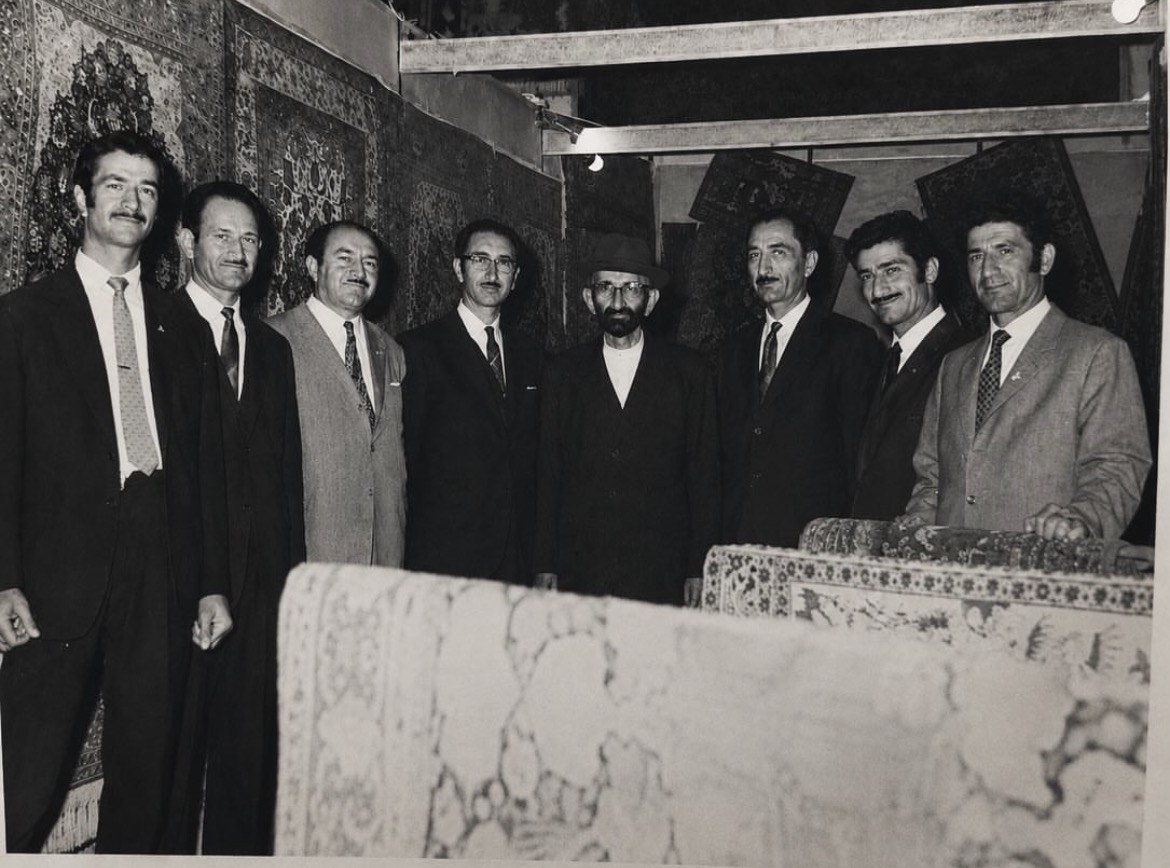
Haj Reza Seirafian at center with his seven sons, before a wall of carpets.
Haj Reza Seirafian with his seven sons. Archival photograph.

Haj Agha Reza Seirafian was born in Isfahan in 1881. He was a banker by trade, a sarraf of good standing in the city, but his love was for the carpet. Around 1939 he left the counting house to give himself to it entirely, and founded the workshop that would carry his name and become, in time, the most celebrated in Isfahan.

He wanted to make the finest carpet that had ever been woven, and he pursued it without compromise. He raised the knot density of the Isfahan carpet far beyond what was usual. He employed the best designers, Ahmad Archang among them, and the most skilled weavers, whom he paid more than any rival house, to the considerable annoyance of his competitors. He insisted on the finest kork wool and silk and on natural dyes. And he wove the family name into the field of each carpet, so that the name of Seirafian became itself the guarantee of the carpet’s quality.

He died in 1974. The house he built was carried on by seven sons and twenty-four grandsons, among them the makers whose carpets are still counted the best of Isfahan. The Seirafian name remains the most sought-after in the city’s weaving.