The Painter’s Carpet
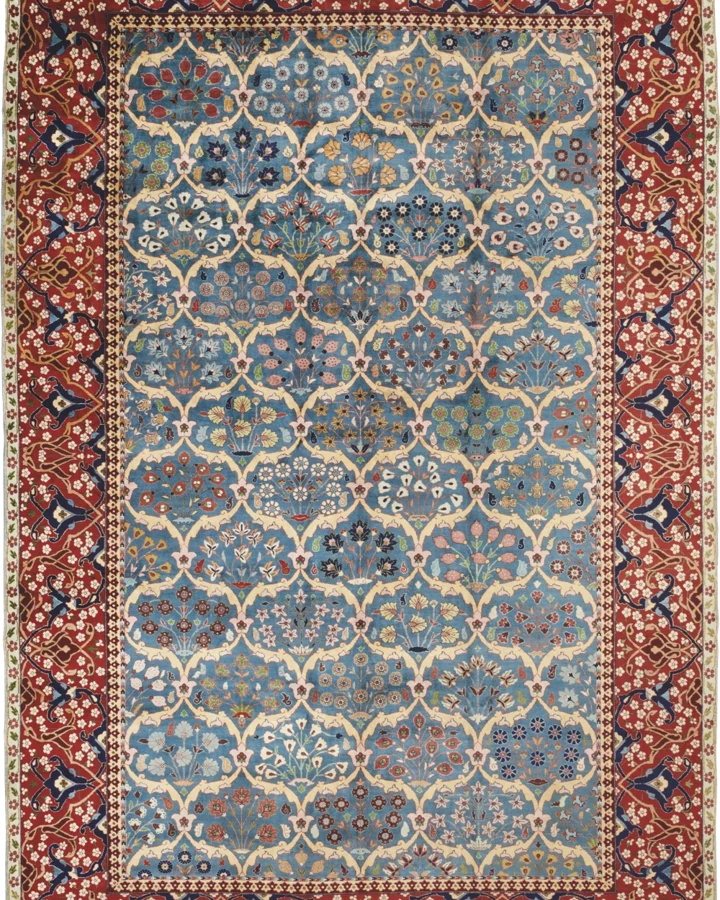
From the Safavid vase carpets to the mashaheer portrait carpet — how a city razed to the ground rebuilt its looms and taught them to draw a face.
Read →A continuing record of the history, makers, and craft behind fine handmade Persian carpets. Where the trade’s knowledge sits mostly in Persian, in oral memory, and in the pages of specialist journals, we gather it, check it against its sources, and set it down in English. These are not catalogue entries. They are the context a serious carpet calls for: how a weaving city came to be, who drew the designs that define it, and what separates a piece woven by a named master from one that merely carries the name.
From the Safavid vase carpets to the mashaheer portrait carpet — how a city razed to the ground rebuilt its looms and taught them to draw a face.
Read →The Safavid founding masters, the Seirafian name that carried Isfahan around the world, and a present crisis — the story of a city that taught itself to weave twice.
Read →Migration from Kashan, the turn to silk, and the rise of the named master workshop — how a city with no looms built a world-class carpet identity in living memory.
Read →From the first Safavid looms to the merchant families who invented the export trade, the twentieth-century masters, and the reckoning that followed.
Read →A Safavid silk peak, a two-century silence, and the Mohtasham revival on Manchester wool — a craft lost and found.
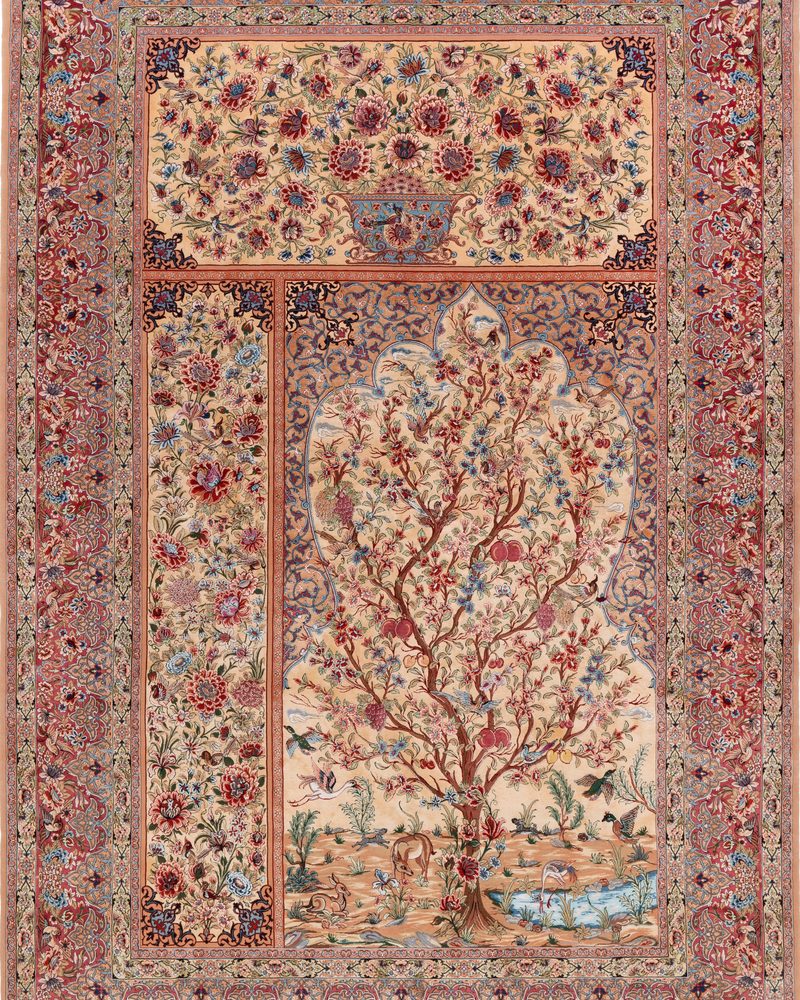
Read →A close reading of a Mehdi Saeedi triptych pair — the Tree of Life, the Gol o Bolbol, and the goldani — three classical Isfahan compositions set into one field.
Read →Ziegler, OCM and PETAG — the foreign firms that scaled the Persian carpet for export between the 1870s and the 1940s, what they cost, and why a name is worth only what can be verified beneath it.
Read →